

Introduction
With the rapid advancement of Generative Artificial Intelligence (Generative AI), AI technologies have gradually become integrated into daily business operations and workflows. AI-powered tools not only improve productivity but also accelerate digital transformation across industries.
However, while organizations benefit from the convenience and efficiency brought by AI, they are also facing unprecedented cybersecurity challenges. Finding the right balance between innovation and information security has become a critical issue that business leaders must address.
AI Adoption Accelerates: Enterprises Enter the AI-Powered Workplace Era
In recent years, Generative AI has experienced explosive growth. From ChatGPT and Gemini to GitHub Copilot, AI tools have become valuable assistants for employees in their daily work.
According to observations from Taiwanese telecommunications providers, nearly 200,000 out of approximately 300,000 enterprises in Taiwan now have employees using AI tools, representing an adoption rate of 66%.
This indicates that AI is no longer merely an emerging technology within the tech industry; it has become an essential component of modern business operations.
Among the available AI platforms, ChatGPT remains the most widely used, followed by Gemini, GitHub Copilot, Claude, and Grok. These AI services significantly enhance document management, software development, data analysis, and administrative efficiency, driving rapid enterprise adoption.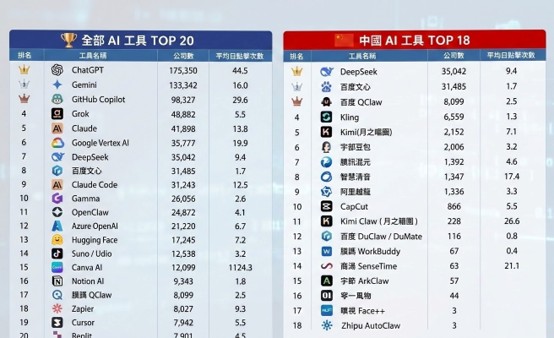
Rising Cybersecurity Risks Behind AI Convenience
As AI becomes increasingly prevalent, organizations are also encountering new cybersecurity concerns. One of the most significant issues is the emergence of Shadow AI.
Shadow AI refers to employees using AI tools without official company authorization to perform work-related tasks.
📝Examples include:
- Uploading company documents for AI analysis
- Using AI to generate customer-related content
- Submitting internal reports to AI platforms for summarization
Although these practices can improve productivity, they may also expose confidential corporate information. Once data is uploaded to external AI platforms, organizations often lose visibility into where the data is stored, how it is used, and what risks may arise, creating potential security vulnerabilities.
Chinese AI Models Become a New Risk Focus
In addition to concerns about data leakage, the use of Chinese AI platforms has become a growing cybersecurity topic for enterprises.
Currently, more than 60,000 employees in Taiwanese enterprises are reportedly using Chinese AI models such as:
DeepSeek
ERNIE Bot (Baidu)
Tencent AI-related services
Some of these platforms have faced concerns regarding excessive data collection, lack of transparency in data processing, compliance and privacy issues, and potential supply chain security risks. As a result, many large enterprises have begun restricting or blocking access to these AI tools.
Shadow AI Case Studies
📝Case 1: Leakage of Proprietary Technology
In 2023, three engineers at Samsung Electronics reportedly uploaded semiconductor source code and internal meeting notes to the public version of ChatGPT while attempting to accelerate debugging and development processes.
Because the information was transmitted to external servers, there were concerns that sensitive data could potentially be retained or used in future model training, creating risks of intellectual property exposure. Following the incident, Samsung implemented multiple restrictions on employee use of ChatGPT, highlighting the growing concern over the leakage of trade secrets through AI tools.
📝Case 2: Customer Data Exposure and Regulatory Violations
A customer service representative at a financial institution may use an AI chatbot to draft responses more efficiently by entering customer transaction records or personally identifiable information.
If such data is submitted without proper anonymization, it may violate personal data protection regulations and expose the organization to substantial penalties. Furthermore, customer information could be transmitted to third-party AI service providers, raising concerns regarding data sovereignty and compliance.
📝Case 3: Disclosure of Business Strategy
A marketing manager at an e-commerce company may input unpublished revenue forecasts or pricing strategies into ChatGPT for analysis.
Although AI-generated insights may appear helpful, sensitive business information could potentially be exposed through interactions with external platforms. In competitive industries, even limited disclosure of strategic planning can create significant business risks.
AI Governance Will Become the Next Enterprise Priority
As organizations continue pursuing the productivity gains offered by AI, establishing comprehensive AI governance frameworks will become increasingly important.
Key governance measures include:
AI usage policies and guidelines
Restrictions on data uploads
Employee education and awareness training
AI traffic monitoring and visibility
Cybersecurity risk management
Without proper governance and oversight, organizations may unknowingly introduce new security vulnerabilities into their environments.
Conclusion and Future Outlook
Generative AI is rapidly transforming the way businesses operate and has become a major driver of digital transformation.
However, as AI tools become deeply embedded within enterprise workflows, cybersecurity challenges are emerging alongside the benefits. The risks associated with Shadow AI and certain external AI platforms demonstrate that organizations must balance efficiency with security.
In the future, enterprises that successfully establish robust AI governance capabilities will gain a significant competitive advantage. The true challenge of the AI era is not simply whether organizations can use AI, but whether they can use it securely and responsibly.
Contact Us
